
Chelsea Rhoden, MA, LPC
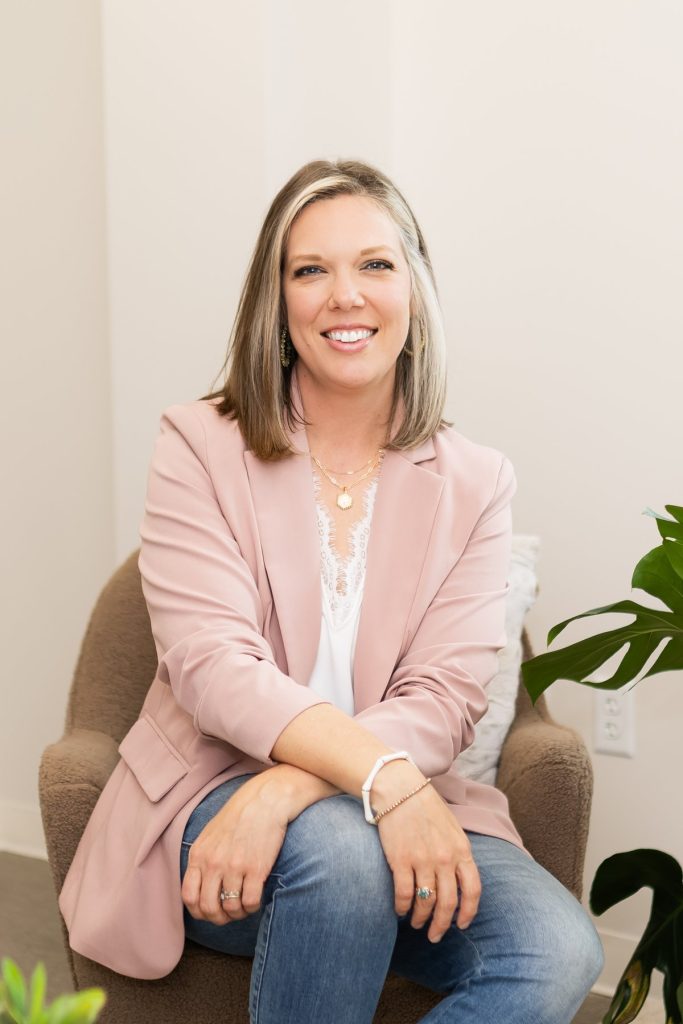
Licensed Professional Counselor & Trauma Therapist in Katy, TX
Chelsea Rhoden is a Licensed Professional Counselor in Katy, Texas, specializing in complex trauma and C-PTSD. She is a Certified Clinical Trauma Professional, is EMDR trained, and works with clients ages 13 and up who bring a broad range of concerns.
She holds a Master of Arts in Biblical Counseling from Dallas Theological Seminary, and works to integrate the spiritual, emotional, psychological, and physical. She sees teens and adults for anxiety, depression, and trauma.
She sees clients in person in Katy and online throughout Texas, and is currently accepting new clients.
Who I Work With
My main area of focus is trauma, though I see people ages 13 and up with a wide variety of concerns. In my experience, the fullest healing happens when the whole person is addressed. We all have spiritual, emotional, psychological, and physical parts that work together as a whole, and leaving any one part untended misses a major piece of who we are and how we function. My desire is to help the whole person grow and heal.
The Trauma Work
Many of the people I meet with in the therapy room don’t come in with an obvious trauma. To most, “trauma” means a major event, like a car wreck or an assault, and sometimes that is the case. More often, though, it was a childhood where the emotional weather changed without warning, a parent who was there and not there, or years of being told that what they were feeling wasn’t actually happening. That kind of thing doesn’t leave a mark you can point to. It leaves a nervous system that never learned it was safe to rest.
That’s the work I do most. It’s not just about one terrible day, but about years of something that shaped a person’s understanding of themself before they were old enough to question it. Uncovering the beliefs about self that have been hiding, so they can be brought into the light, takes time and trust. So does discovering how the body and nervous system have responded, and how they continue to operate today.
Sometimes there is just one awful incident, and that deserves attention too. Whatever a client’s reason for seeking therapy, it matters to me that they understand I do this work so they don’t have to sit in their emotions alone. I want to help them learn to understand themselves, manage their emotions well, and heal from past wounds, especially in light of a God who loves them deeply and would never leave them.
How I Work
The trust between client and therapist is one of the most powerful components in the therapeutic process. I see the opportunity to build that trust as an honor. I use an eclectic approach, tailored to what will actually help the person in front of me — there isn’t one method that fits everyone who walks in.
Trauma work goes at the pace of your nervous system, not the pace of a treatment plan. Before we go anywhere near the difficult material, we build what’s needed to handle it: grounding, regulation, and enough safety in the room that you aren’t white-knuckling your way through a session. With complex trauma this stage isn’t a preliminary — it is often most of the first few months, and sometimes longer, and skipping it is how people get hurt in therapy.
The approaches I return to most often are:
- Internal Family Systems (IFS) — working with the different parts of you that want different things, including the ones that have been protecting you since childhood, rather than treating any of them as the enemy.
- Somatic therapy — paying attention to what the body is doing, because trauma is held there as much as in memory, and with long-standing trauma it often shifts there first.
- Cognitive Behavioural Therapy (CBT) — examining the thoughts running underneath a feeling, and testing whether they are accurate.
- Narrative therapy — separating you from the problem, and looking at the story you were handed about who you are.
- EMDR — a well-researched trauma treatment that works with how a memory is stored rather than requiring you to narrate it in detail.
Faith In The Work
My training is in Christian counseling, and faith is part of how I understand what it means for a person to heal. How much of that shows up in the room is up to you. Some clients want Scripture and prayer to be an explicit part of the work. Others want a therapist who shares their faith but would rather we spend the hour elsewhere. Some want none of it at all. All are welcome, and it is my delight to serve you in a way that honors where you are.
Training & Credentials
- Master of Arts in Biblical Counseling — Dallas Theological Seminary
- Licensed Professional Counselor, State of Texas — License #79019
- Certified Clinical Trauma Professional (CCTP)
- EMDR trained — Eye Movement Desensitization and Reprocessing
- Restoration Therapy, Level 1
Areas of Focus
COMMON QUESTIONS
WHAT IS THE DIFFERENCE BETWEEN PTSD AND COMPLEX TRAUMA?
PTSD typically follows a single overwhelming event and centers on re-experiencing it — flashbacks, nightmares, avoiding reminders. Complex trauma, or C-PTSD, develops from repeated or prolonged harm, usually inside relationships and often beginning in childhood. It shows up less as flashbacks and more as difficulty regulating emotion, a persistently harsh view of yourself, and the same painful patterns repeating in close relationships. If you have read about PTSD and thought that’s not quite it, this is often why.
DO I HAVE TO BE A CHRISTIAN TO WORK WITH YOU?
No. My training is in Christian counseling and faith matters to me, but the work is yours and it goes where you need it to go. If faith is not part of how you understand your life, that does not make you a bad fit for me.
WHAT DOES “PARTS WORK” MEAN?
It comes from Internal Family Systems. The idea is that the mind is not one voice — there is a part of you that wants to leave the relationship and a part that cannot imagine it, and both are trying to help. Instead of picking a side, we get curious about what each part is protecting. People often find it is the first time a part of them they have been at war with gets treated kindly. It tends to be a good fit for complex trauma, where the protective parts have usually been working overtime for decades.
DO I HAVE TO TALK ABOUT WHAT HAPPENED?
Less than you would expect. EMDR and somatic work engage the memory as it is held in the body and nervous system, rather than requiring a detailed verbal account. For a lot of people, that is what makes trauma work possible when talking about it directly never has been.
HOW LONG DOES COMPLEX TRAUMA THERAPY TAKE?
Longer than single-incident trauma, and it is fairer to say so up front. One overwhelming event sometimes resolves in a handful of sessions. Complex trauma is usually a year or more, because we are not processing one memory — we are changing a pattern laid down across a childhood. That said, many people notice a difference in daily life well before the work is finished.